


Domain Outdoor Japanese Millet Food Plot Seed
Domain Outdoor Japanese Millet Food Plot Seed
Add to cart to see shipping costs


Family-Owned Since 1998
1,500+ Verified 5-Star Reviews
100,000+ Loyal Customers
100% Secure Payment Processing
U.S. Based Customer Support – WE ARE HUNTERS TOO!
Manufacturer Backed Warranties
Outdoors For Less is a family-owned hunting outfitter established in 1998 specializing in premium hunting gear and deer blinds. We stand behind every order before, during, and after delivery.
Description
Reviews
Domain Outdoor Japanese Millet Food Plot Seed
Fast-Growing Wildlife Cover & Seed Production for Wet Ground
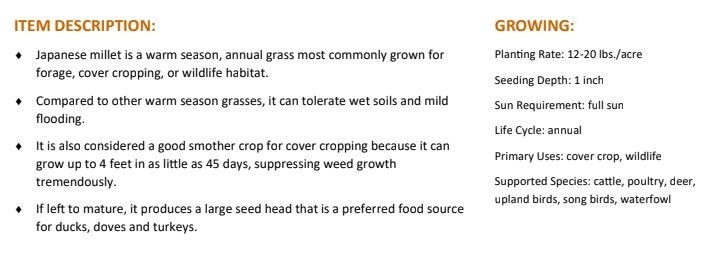
Domain Outdoor Japanese Millet Habitat Seed is a fast-growing warm season annual built for wildlife habitat, wet ground, and seasonal cover. Capable of reaching approximately 3 to 4 feet tall in under 60 days under favorable conditions, Japanese Millet is especially valuable in areas where many other habitat plantings struggle, including wet, poorly drained, and mildly flooded soils.
Features and Benefits
Made for wet ground. Japanese Millet can tolerate moderately drained, wet, and mildly flooded soils, making it an excellent option around ponds, wetlands, low areas, and waterfowl habitat.
Fast-growing cover. Under favorable growing conditions, plants can reach approximately 3 to 4 feet tall in less than 60 days, quickly adding useful vertical structure to otherwise open ground.
Produces wildlife-friendly seed heads. Mature plants produce seed that can provide an attractive food source for ducks, doves, pheasants, turkey, and other birds.
Useful for more than waterfowl. The combination of height, seed production, and cover can benefit upland birds and whitetails in addition to ducks and other wetland wildlife.
Fits difficult habitat areas. Low spots that stay too wet for a traditional food plot can become productive wildlife habitat instead of acreage you simply work around.
Simple annual habitat option. Japanese Millet establishes quickly during warm weather and provides useful seasonal food and cover without committing the area to a permanent perennial planting.
Specifications
| Domain Outdoor Japanese Millet Habitat Seed | |
| Plant Type | Warm season annual grass |
| Best Uses | Waterfowl habitat, wet areas, wildlife cover, upland bird habitat, seasonal structure |
| Typical Height | Approximately 3 to 4 feet |
| Growth Rate | Can reach mature height in under 60 days under favorable conditions |
| Sunlight | Full sun |
| Soil Conditions | Moderately drained, well drained, wet, or mildly flooded soils |
| Recommended pH | 5.5 to 7.0 |
| Seed Depth | Up to 1 inch |
| Seed Rate | 16 lbs. per acre |
| 4 lb Jug | Approximately 1/4 acre |
| Planting Season | Spring through summer |
| Minimum Soil Temperature | Approximately 65°F or warmer |
Growth rate, mature height, seed production, and wildlife use will vary with temperature, rainfall, soil conditions, fertility, and planting timing.
How Much Do You Need?
Japanese Millet is planted at approximately 16 lbs. per acre. Each 4 lb Jug covers approximately 1/4 acre, which makes calculating smaller habitat projects straightforward.
A half-acre wetland or wildlife plot requires approximately 8 lbs. of seed, while one full acre calls for approximately 16 lbs.
If you're planting irregular pond edges or wetland pockets, calculate the area you're actually seeding rather than the size of the entire property. Wet areas have a habit of looking smaller from the tractor seat than they do when you're carrying seed across them.
Full Description
Some of the most valuable wildlife habitat on a property is also some of the hardest ground to plant. Low areas stay wet, pond edges flood, and spots that look perfect in July can turn into mud after the next heavy rain. Japanese Millet is built for exactly those kinds of places.
This warm season annual can handle conditions ranging from moderately drained soil to wet or mildly flooded ground. Under favorable conditions, it grows quickly and can reach approximately 3 to 4 feet tall in less than 60 days, turning open ground into seasonal cover in a relatively short growing window.
The real habitat value comes when the plants mature. Japanese Millet develops seed heads that provide a food source for ducks, doves, pheasants, turkey, and other birds, while the standing vegetation itself adds cover and structure. Whitetails can also benefit from the additional security and habitat diversity created around wetland edges and open areas.
For waterfowl managers, that combination of wet-soil tolerance and seed production makes Japanese Millet particularly useful. For deer and upland habitat managers, it provides another way to make awkward low ground contribute to the property instead of simply being the place where the tractor gets stuck.
Because it is an annual, Japanese Millet also gives land managers flexibility. You can use it to address a habitat need for one season, rotate the area the following year, or incorporate it into a broader wetland and wildlife management program.
Planting Notes
Wait for warm soil. Japanese Millet is a warm season grass and should be planted when soil temperatures have reached approximately 65°F or warmer. Planting too early into cold ground can lead to slow establishment and increased competition from weeds.
Plant spring through summer. The appropriate date depends on your region and habitat objective, but warm soil and adequate moisture are more important than simply planting on a particular calendar date.
Keep planting depth reasonable. Seed can be planted up to approximately 1 inch deep. Good seed-to-soil contact and adequate moisture are important for quick establishment.
Use the wet ground to your advantage. Japanese Millet can tolerate moderately drained, wet, and mildly flooded soils. That makes it particularly useful in locations where conventional upland food plot crops may struggle.
Check your pH. The recommended soil pH range is approximately 5.5 to 7.0. A soil test can help identify pH or fertility limitations before you put seed in the ground.
Why Habitat Managers Plant It
Japanese Millet solves a very specific habitat problem well: how do you turn wet or flood-prone ground into something wildlife can actually use?
Its fast growth creates cover quickly, its mature seed heads provide food for multiple bird species, and its tolerance for wet conditions opens up planting opportunities where many traditional food plot crops are poor fits. For properties with ponds, wetlands, low ground, or seasonal water, it can turn an overlooked corner into one of the more active wildlife areas on the property.
Frequently Asked Questions
Is Japanese Millet primarily for ducks, or will other wildlife use it?
Waterfowl are one of the primary reasons habitat managers plant Japanese Millet, but they aren't the only beneficiaries. Mature seed heads can provide food for ducks, doves, pheasants, turkey, and other birds, while the 3 to 4 foot vegetation adds seasonal cover that can also benefit whitetails and other wildlife.
Can Japanese Millet grow in standing water?
Japanese Millet is well suited to wet and mildly flooded soil conditions, which is one of its major advantages for wetland habitat. However, planting conditions still matter. The seed needs an opportunity to establish rather than simply being dropped into deep permanent water.
How quickly does Japanese Millet grow?
Under favorable warm-season conditions, Japanese Millet can reach approximately 3 to 4 feet tall in less than 60 days. Temperature, moisture, fertility, planting density, and competition will all influence the actual growth rate.
When should I plant Japanese Millet?
Plant during the spring or summer once soil temperatures reach approximately 65°F or warmer. Because this is a warm season annual, warm soil is important for strong germination and establishment.
How much Japanese Millet seed do I need per acre?
The recommended rate is approximately 16 lbs. per acre. One 4 lb Jug covers approximately 1/4 acre, two Jugs cover about 1/2 acre, and four Jugs provide the approximate rate for one acre.
How deep should I plant Japanese Millet?
Plant the seed up to approximately 1 inch deep. Avoid burying it excessively. A prepared seedbed with good seed-to-soil contact and adequate moisture gives the crop a better chance to establish quickly.
Is Japanese Millet a good choice around a pond or wetland?
Yes. Pond margins, wetland edges, low fields, and seasonally wet areas are some of the locations where Japanese Millet makes the most sense. Its tolerance for wetter soil lets habitat managers put otherwise difficult acreage to work producing food and cover.
Will Japanese Millet come back every year?
Japanese Millet is an annual, so it should not be treated like a permanent perennial habitat planting. If you want the same stand in future years, plan on managing or replanting the area as needed.
What soil pH is best for Japanese Millet?
The recommended pH range is approximately 5.5 to 7.0. Japanese Millet is adaptable to several soil conditions, but correcting major pH or fertility problems before planting can improve establishment and overall seed production.