


Domain Outdoor RC Sundance Switchgrass Habitat Seed
Domain Outdoor RC Sundance Switchgrass Habitat Seed
Add to cart to see shipping costs


Family-Owned Since 1998
1,500+ Verified 5-Star Reviews
100,000+ Loyal Customers
100% Secure Payment Processing
U.S. Based Customer Support – WE ARE HUNTERS TOO!
Manufacturer Backed Warranties
Outdoors For Less is a family-owned hunting outfitter established in 1998 specializing in premium hunting gear and deer blinds. We stand behind every order before, during, and after delivery.
Description
Reviews

Domain Outdoor RC Sundance Switchgrass Habitat Seed
Domain Outdoor RC Sundance Switchgrass Habitat Seed for Deer Screening and Bedding Cover
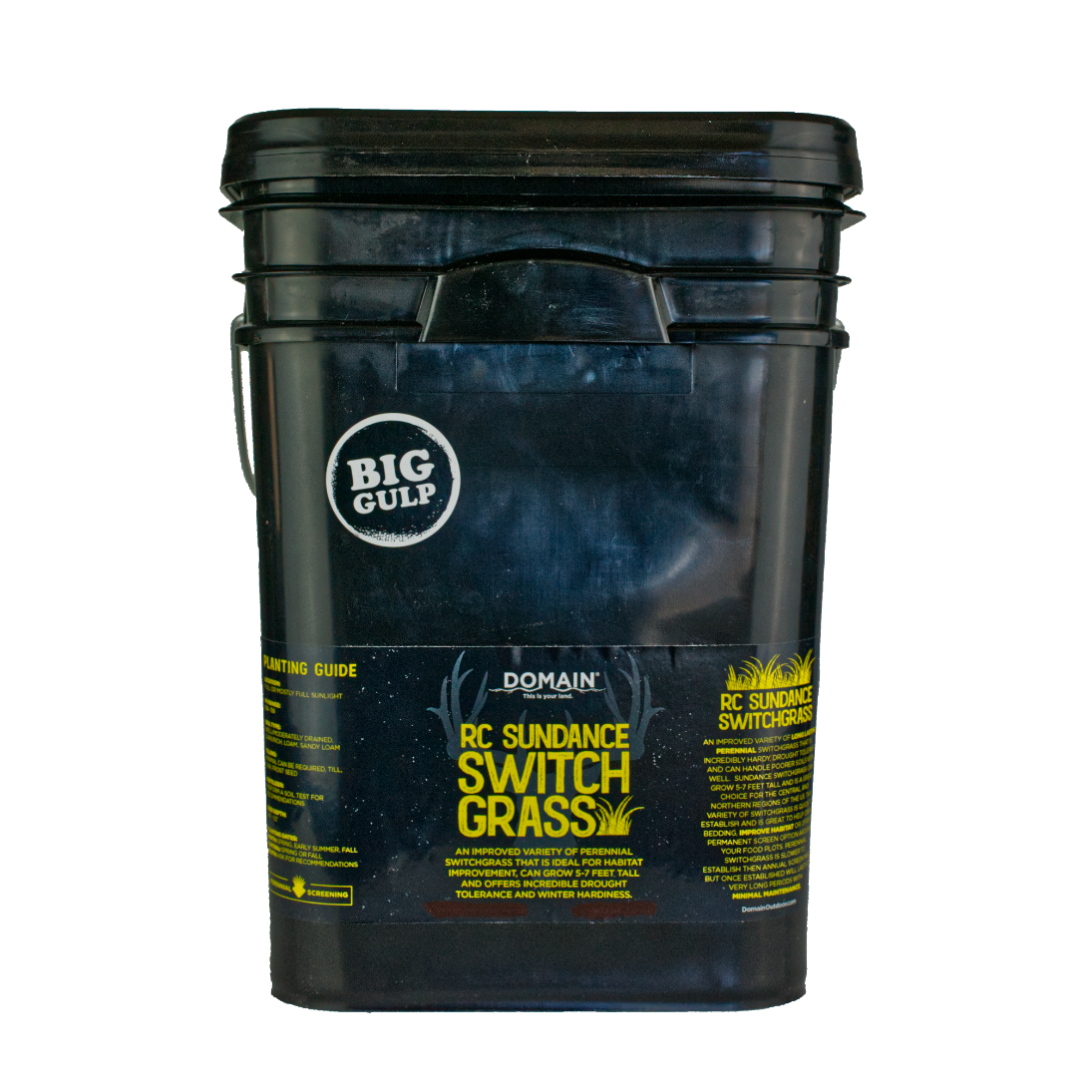
RC Sundance is an improved native switchgrass planted for one job: cover. It grows tall and upright, roughly 6.5 to 8 ft under good conditions, which makes it a working visual screen for hiding access routes, blocking sight lines into food plots, building whitetail bedding cover, and connecting habitat with travel corridors. It is a perennial warm season grass, so it comes back every year and gets better as the stand matures. Available in a 5 lb Jug covering about 1/2 acre and a 20 lb Big Gulp covering about 2 acres.
🌿 Features and Benefits
Tall upright growth. RC Sundance reaches roughly 6.5 to 8 ft under favorable soil and rainfall, tall enough to break a deer's line of sight to your stand, blind, or field entry.
Improved establishment. Developed from improved upland switchgrass genetics selected for stronger seedling vigor and faster establishment than its parent material, which matters on a species where year one is usually the hardest part.
Stands up through late season. Erect growth and winter hardiness help the stand hold its structure into the coldest part of the season, when screening and security cover are worth the most.
Screening, bedding, and corridors. Built for hiding access, screening plots, adding security cover to open ground, and creating movement between existing habitat.
A permanent habitat asset. This is a perennial that becomes part of the property, not an annual plot that disappears after one growing season.
Adaptable and drought tolerant. Performs across a range of northern and midwestern growing conditions and holds up in dry years better than most cool season cover options.
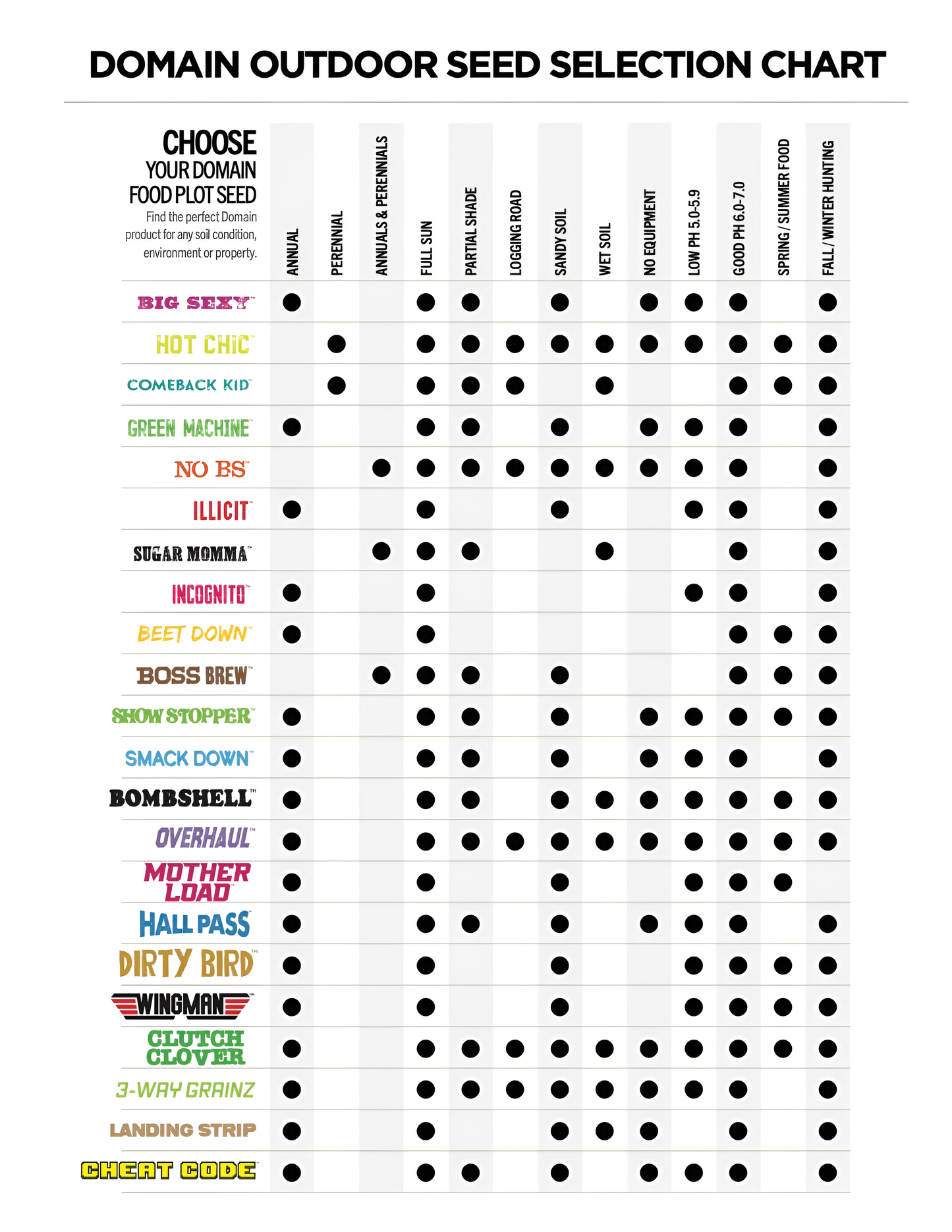
🌿 How Does This Seed Compare

Check Out The Full Lineup Of Domain Food Plot Seed
🌿 Specifications
| Variety | RC Sundance Switchgrass |
| Plant type | Native warm season perennial grass |
| Best uses | Deer screening, bedding cover, travel corridors, habitat improvement |
| Mature height | 6.5 to 8 ft under favorable conditions |
| Sunlight | Full sun to partial sun |
| Soil | Well drained to moderately drained |
| Target pH | 5.8 to 7.0 |
| Seeding depth | 1/4 in to 1/2 in |
| Seeding rate | About 10 lbs per acre based on package coverage |
| Soil temperature at planting | 60 to 65 F at seeding depth for spring and early summer plantings |
| 5 lb Jug | About 1/2 acre |
| 20 lb Big Gulp | About 2 acres |
| Region | Northern and midwestern plantings |
Height, stand density, and establishment speed vary with rainfall, fertility, seedbed prep, and weed pressure.
🌿 Which Size Do You Need
Most screening buyers over order or under order because they calculate off the acreage of the whole field instead of the strip they are actually planting. Do the strip math instead.
Multiply the width of your screen by its length, then divide by 43,560 to get acres.
A 40 ft wide screen running 1,000 ft along a field edge is about 0.9 acre, or roughly 9 lbs of seed. That is one 20 lb Big Gulp with enough left over for a second short strip or to thicken thin spots the following year.
A 40 ft by 500 ft screen is about 0.45 acre, or roughly 4.5 lbs. That is the 5 lb Jug.
Plan on at least 30 ft of width for a screen you cannot see through. Narrow strips look thin from an angle, take longer to close in, and are the most common reason a switchgrass screen disappoints in year two.
🌿 Full Description
Improving a property is not only about giving deer more to eat. Plenty of farms have food and still hunt poorly, because deer can see, hear, and pattern the hunter long before he gets to the stand. What those properties are missing is cover.
RC Sundance is the tool for that half of the equation. Plant it to screen the access route into a stand, wall off a food plot from the road, connect a bedding area to a plot with a travel corridor, or convert exposed acreage into ground that holds deer instead of just feeding them. Used well, it changes how you enter and exit, and it gives whitetails the structure they need to bed and move with confidence.
The variety earns its place. RC Sundance was selected from improved upland switchgrass genetics for seedling vigor, erect growth, winter hardiness, and standability, and published agronomic information puts it at roughly 6.5 to 8 ft under favorable conditions.
Set your expectations correctly and you will be happy with it. This is a long term habitat investment, not an instant plot. Establishment is where the outcome is decided: seedbed prep, planting depth, moisture, and weed competition. A first year stand looks like a disappointment. A third year stand looks like a wall. Once established, a well placed switchgrass planting quietly changes the way you hunt a property for a decade or more.
🌿 Planting Notes
Seedbed matters more than anything else on this crop. Plant into a firm, clean seedbed at 1/4 in to 1/2 in. Small native grass seed planted too deep will not come up, so seed to soil contact beats burial every time.
For spring and early summer planting, wait until soil temperature reaches 60 to 65 F at seeding depth. Planting into cold soil is the fastest way to lose a stand to weed competition.
Dormant seeding in late fall or winter is a proven alternative. The seed sits through the cold and the natural stratification period, then germinates on its own schedule in spring. Many habitat managers prefer it on tough sites.
Weed control during year one is the difference between a screen and a failure. Take a soil test, start clean, and plan your weed strategy before the seed goes in the ground.
🌿 Why Hunters Plant It
A good food plot brings deer to the property. It does not make them feel secure, and it does not get you to your stand undetected.
RC Sundance handles the part your plots cannot. On open farm ground especially, a planned switchgrass screen turns exposed acreage into a functioning piece of the property, changing where deer bed, how they travel, and how many times you get to hunt your best stand before the deer figure you out.
🌿 Frequently Asked Questions
How long before it works as a deer screen?
Do not buy switchgrass expecting a six foot wall a few months after planting. RC Sundance establishes faster than its parent material, but it is still a perennial native grass. Year one is thin and often discouraging. Year two is usable. Year three is when most people say it was worth it. Moisture, weed competition, planting depth, and site prep drive how fast you get there.
How much seed do I need for a screen?
Package coverage works out to about 10 lbs per acre, with the 5 lb Jug at roughly 1/2 acre and the 20 lb Big Gulp at roughly 2 acres. Calculate the actual square footage of your strips, not the acreage of the field. Width times length, divided by 43,560, gives you acres.
Can I spray it during establishment?
Weed control in year one is the single biggest factor in whether the stand succeeds, and switchgrass has more herbicide tolerance during establishment than most native grasses. Herbicide options vary by state, some products are restricted use, and the label is the law. Talk to your local co op or extension office and follow label direction for your state before you spray anything over a new seeding.
When should I plant?
Two good windows. Spring into early summer once soil temperature hits 60 to 65 F at seeding depth, or a dormant seeding in late fall or winter that lets the seed overwinter and come up on its own in spring. Both work. The dormant seeding takes the guesswork out of cold soil timing.
Where should I plant it if the goal is hiding access?
Start where deer can currently watch you walk in: exposed field edges, plot approaches, access lanes, and the gap between the truck and the stand. Break that sight line, but keep prevailing wind in the plan. A perfect visual screen will not save an access route that blows your scent into the bedding area every time you use it.
Will it hold bedding deer?
Yes. Domain specifically recommends RC Sundance for bedding cover, screening, corridors, and habitat improvement, and larger blocks are especially valuable on open properties with no tall security cover. It works best as one piece of diverse habitat. Switchgrass does not replace timber, brush, and food, it fills the gap between them.
How deep do I plant it, and what soil does it want?
1/4 in to 1/2 in deep into a firm seedbed, in well drained to moderately drained soil, full to partial sun, pH between 5.8 and 7.0. Take a soil test before you put in a perennial stand you intend to keep for a decade.