

Domain Outdoor Comeback Kid™ Food Plot Seed
Domain Outdoor Comeback Kid™ Food Plot Seed
Add to cart to see shipping costs


Family-Owned Since 1998
1,500+ Verified 5-Star Reviews
100,000+ Loyal Customers
100% Secure Payment Processing
U.S. Based Customer Support – WE ARE HUNTERS TOO!
Manufacturer Backed Warranties
Outdoors For Less is a family-owned hunting outfitter established in 1998 specializing in premium hunting gear and deer blinds. We stand behind every order before, during, and after delivery.
Description
Reviews
Comeback Kid™ Food Plot Seed
Clover and Alfalfa for Long-Term, High-Protein Perennial Forage
Comeback Kid™ Food Plot Seed is designed for long-term perennial food plots, year-round nutrition, and high-protein forage. Built around four clover varieties and one alfalfa variety, it is the kind of planting you establish carefully once, then manage for repeat forage instead of starting from scratch every fall.
Features and Benefits
Five perennial forages. Four clover varieties plus alfalfa spread risk and improve forage diversity.
Built for multiple seasons. This is the opposite of a one-and-done annual plot; proper establishment can pay off for years.
High-protein nutrition. Clover and alfalfa are dependable choices for spring and summer forage when deer nutritional demand is high.
Deep and shallow rooting. Alfalfa and clovers use the soil profile differently, helping the stand handle variable conditions.
Worth getting pH right. Perennial legumes are a long-term investment, so correcting soil before planting matters more than cutting corners.
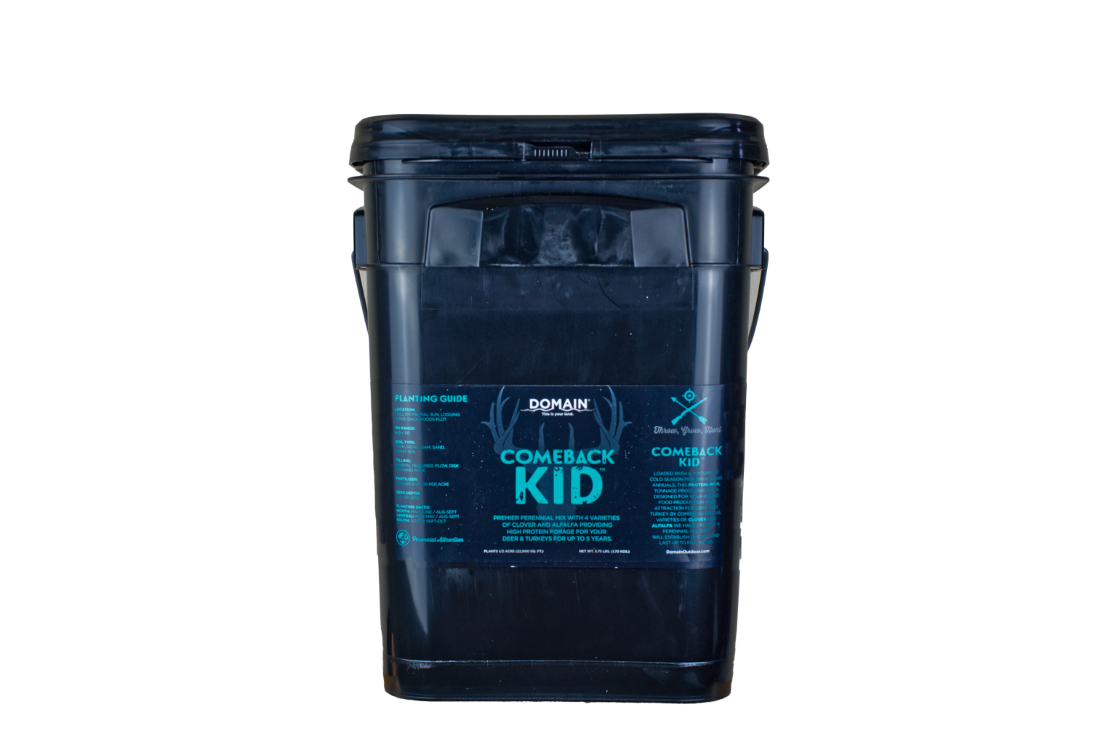
Scales well. A 3.75 lb Jug covers about 1/2 acre and the 30 lb Big Gulp about 4 acres.
Specifications
| Comeback Kid™ Food Plot Seed | |
| Product Type | Perennial / legume food plot seed |
| Seed / Plant Type | four clover varieties and one alfalfa variety |
| Best Uses | Long-term perennial food plots, year-round nutrition, and high-protein forage |
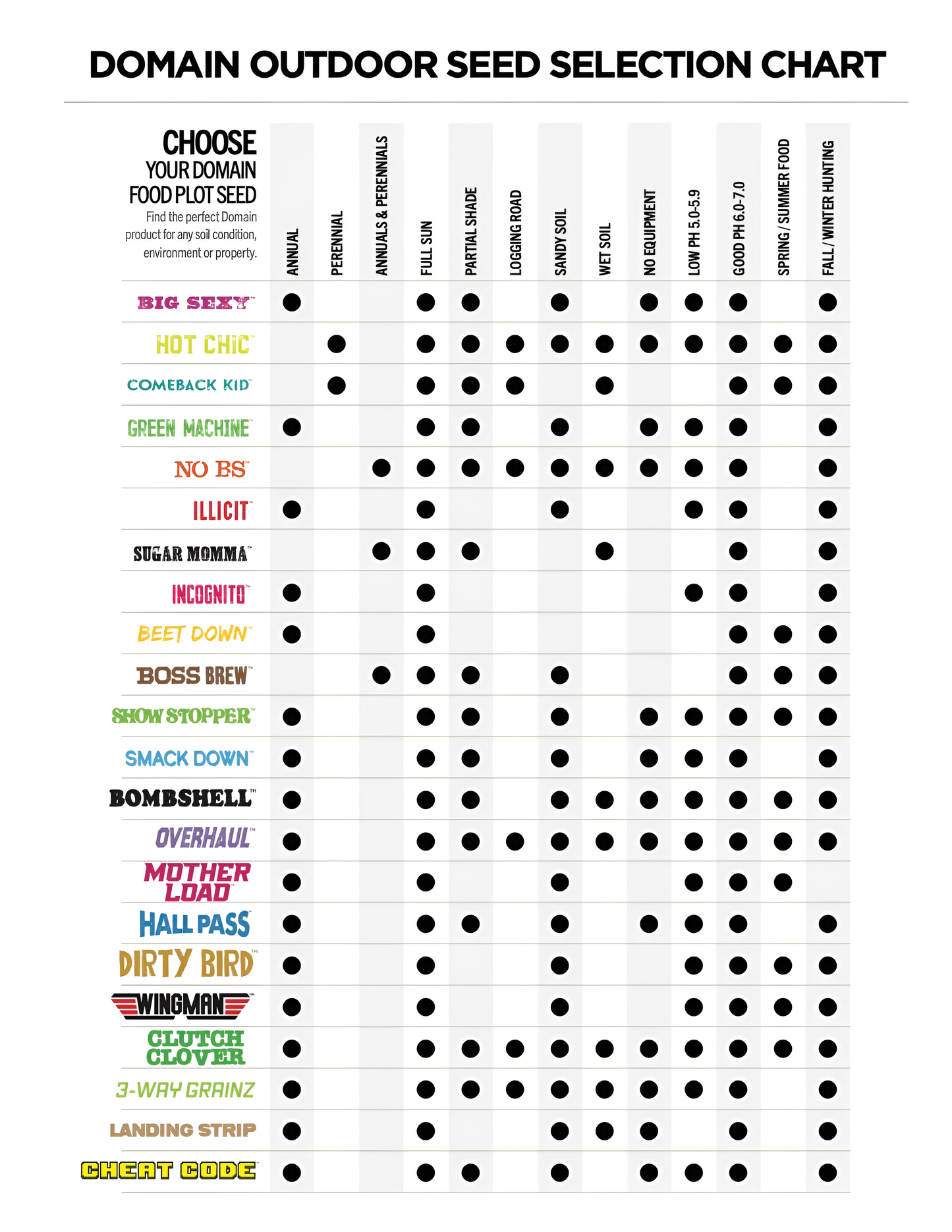
| Sunlight | full sun to partial sun |
| Soil | dark/rich, loam, sand, and moist soil |
| Recommended pH | 6.0–7.0 |
| Package / Coverage 1 | 1 Jug (3.75 lbs) = 1/2 acre |
| Package / Coverage 2 | 1 Big Gulp (30 lbs) = 4 acres |
| Planting Window | North: March–June or August–September Central: March–May or August–September South: February–April or September–October |
Actual establishment, forage production, and wildlife use will vary with rainfall, soil conditions, planting timing, fertility, and browse pressure.
How Much Do You Need?
1 Jug (3.75 lbs) = 1/2 acre. For larger projects, 1 Big Gulp (30 lbs) = 4 acres. Use the stated coverage as your starting point rather than seeding the whole container by feel.
For irregular hunting plots, multiply average width by average length and divide by 43,560 to estimate acres. That two-minute calculation is cheaper than buying extra seed and a lot less frustrating than discovering you only planted two-thirds of the plot.
Full Description
Perennial-style plots are about consistency rather than a one-week burst of attraction. Comeback Kid™ Food Plot Seed uses four clover varieties and one alfalfa variety to create long-term perennial food plots, year-round nutrition, and high-protein forage.
The payoff is repeat forage. Instead of resetting the plot every season, you manage fertility, weeds, mowing or clipping where appropriate, and stand health so the planting keeps contributing across multiple growth cycles.
That makes pH and soil preparation especially important. If you are asking a stand to live on the property for years, fixing the soil before planting is usually cheaper than spending those same years wondering why it never looked right.
Use perennial plots as a stable forage base, then rotate annual grains, brassicas, and warm-season crops elsewhere to keep the property diverse.
Planting Notes
Plant for your region. North: March–June or August–September Central: March–May or August–September South: February–April or September–October. Treat the calendar as a window, then let current soil moisture and forecast rainfall make the final call.
Start with pH. The supplied target range is 6.0–7.0. A soil test tells you whether lime or other correction belongs ahead of fertilizer and seed.
Match the site. Recommended soil fit is dark/rich, loam, sand, and moist soil. Good drainage and a firm seedbed usually beat a fluffy, overworked seedbed.
Plan for weed control. A clean first season is worth the effort because perennial stands have to live with the competition you leave behind.
Why Food Plotters Plant It
Comeback Kid™ Food Plot Seed is for plotters who would rather manage a productive stand than recreate the same bare dirt every year. The reward is repeat forage and a more stable food source on the property.
Treat the stand like an asset: soil test it, control weeds, and protect enough leaf area that deer do not browse it into submission before it can recover.
Frequently Asked Questions
What is Comeback Kid Food Plot Seed best used for?
Its best fit is long-term perennial food plots, year-round nutrition, and high-protein forage. That is the role this product should solve on the property; if your main need is something else, another seed type may be a better use of the acre.
What is actually in Comeback Kid Food Plot Seed?
The supplied product information lists four clover varieties and one alfalfa variety. Knowing the species matters because it tells you whether the plot is built around fast annual forage, perennial nutrition, grain, brassicas, or habitat structure.
How much Comeback Kid Food Plot Seed do I need?
Use the published package coverage rather than guessing: 1 Jug (3.75 lbs) = 1/2 acre; 1 Big Gulp (30 lbs) = 4 acres. Measure irregular plots before ordering so your seeding rate stays where it belongs.
When should I plant Comeback Kid Food Plot Seed?
The supplied planting guidance is North: March–June or August–September Central: March–May or August–September South: February–April or September–October. Use that as a regional window, then adjust for local rain, soil moisture, temperature, and the date you need the plot hunting well.
What soil pH should I have before planting?
The listed target is 6.0–7.0. If your soil is below that range, correcting pH can improve nutrient availability and make the fertilizer you apply work harder.
How long should I expect the plot to last?
That depends on the species, soil, weeds, browse pressure, and management. Perennial-style plots earn their value when pH and fertility are maintained and competition is controlled.
Can this work in partial shade?
The supplied sunlight guidance is full sun to partial sun. Partial shade can work for many perennial forages, but fewer hours of sunlight generally means less total production.
What fertility matters most?
Start with a soil test. Established legumes often need less added nitrogen than grains or brassicas, while pH, phosphorus, and potassium can be critical to long-term stand health.