

Domain Outdoor Hall Pass™ Food Plot Seed
Domain Outdoor Hall Pass™ Food Plot Seed
Add to cart to see shipping costs


Family-Owned Since 1998
1,500+ Verified 5-Star Reviews
100,000+ Loyal Customers
100% Secure Payment Processing
U.S. Based Customer Support – WE ARE HUNTERS TOO!
Manufacturer Backed Warranties
Outdoors For Less is a family-owned hunting outfitter established in 1998 specializing in premium hunting gear and deer blinds. We stand behind every order before, during, and after delivery.
Description
Reviews
Hall Pass™ Food Plot Seed
Fast-Establishing Fall Forage for Late Starts and Plot Rescue
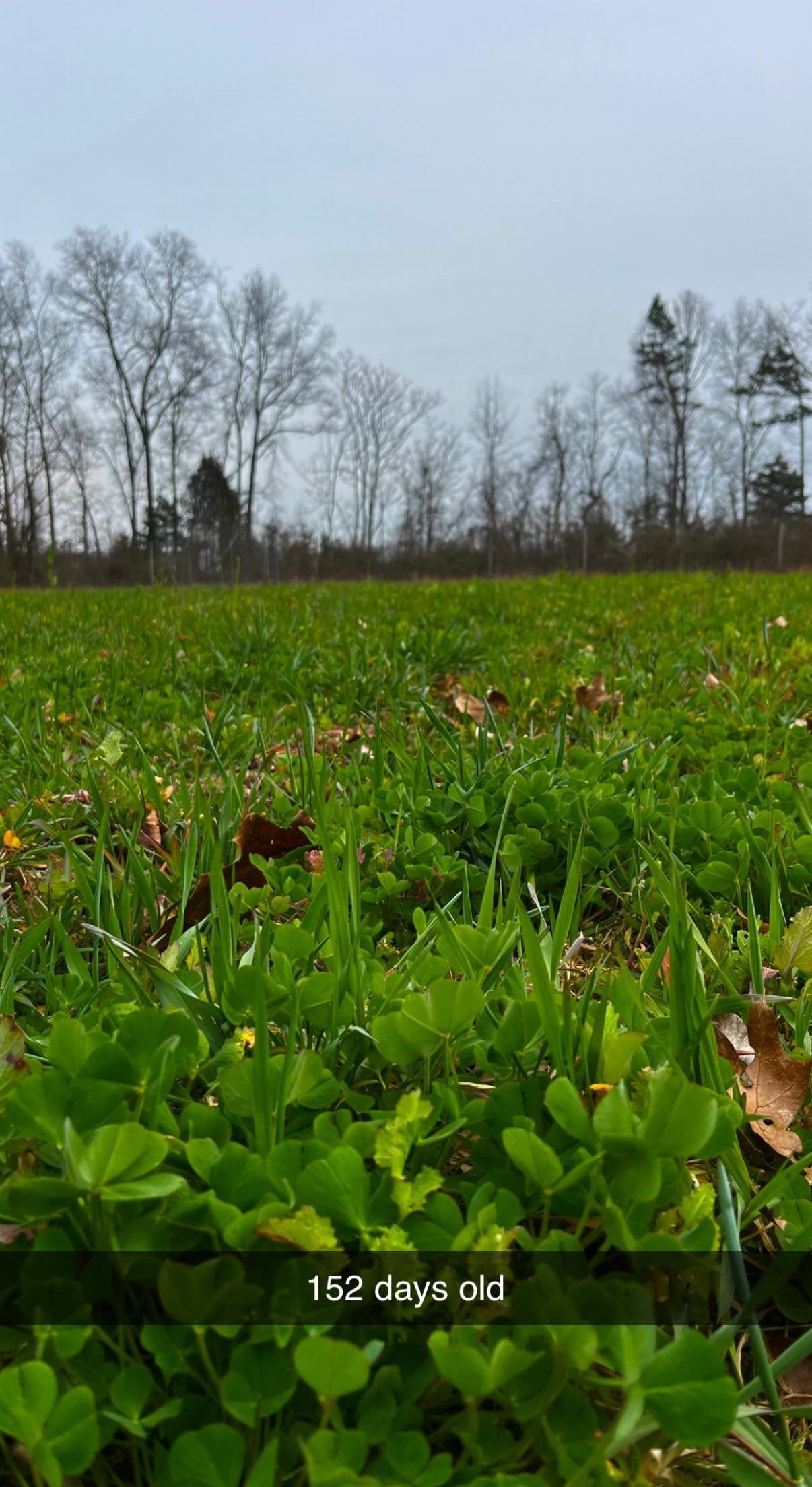
Hall Pass™ Food Plot Seed is built for last-minute fall food plots, plot rescue, no-till starts, and year-round transition food. The mix combines winter rye, winter wheat, red clover, white clover, turnip, radish, and hybrid forage brassica, giving hunters several forage types in one planting so the plot is not depending on a single crop, weather pattern, or deer preference.
Features and Benefits
Built for late starts. Winter rye, winter wheat, clovers, turnip, radish, and hybrid brassica give you multiple species with fast fall potential.
Plot-rescue flexibility. Useful when the original plan did not happen and the calendar is already getting uncomfortable.
Annual plus carryover species. Grains and brassicas create quick attraction while clovers can extend the green window.
No-till friendly mix. Several components are forgiving enough for backwoods plots where perfect equipment access is limited.
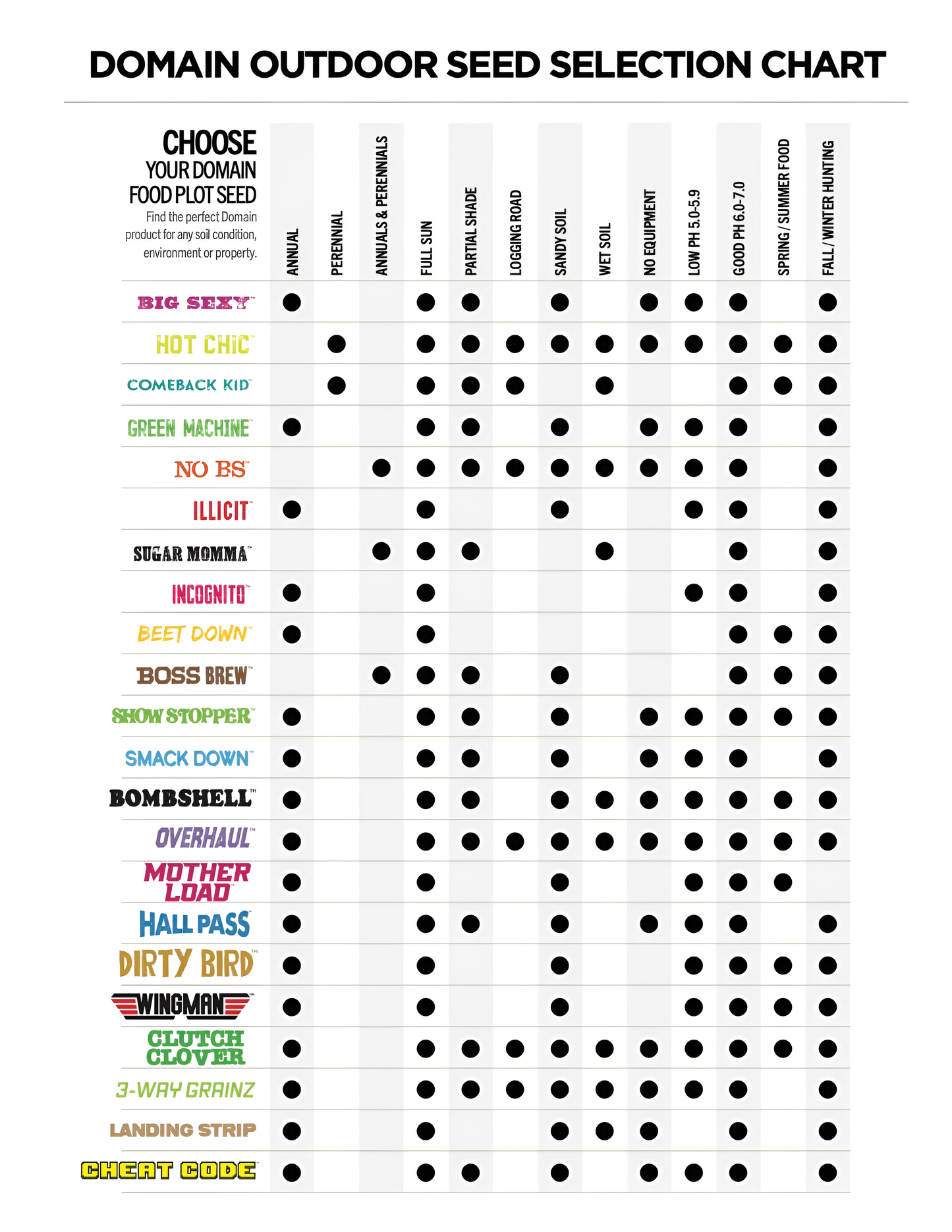
Wide pH window. The 5.5–7.5 range gives the blend flexibility across many common hunting properties.
Two practical sizes. The Jug plants about 1/6 acre and the 20 lb bag about 1/2 acre.
Specifications
| Hall Pass™ Food Plot Seed | |
| Product Type | Multi-species food plot seed blend |
| Seed / Plant Type | winter rye, winter wheat, red clover, white clover, turnip, radish, and hybrid forage brassica |
| Best Uses | Last-minute fall food plots, plot rescue, no-till starts, and year-round transition food |
| Sunlight | full sun to partial sun |
| Soil | well-drained, moderately drained, dark/rich, sandy, and clay soils |
| Recommended pH | 5.5–7.5 |
| Package / Coverage 1 | 1 Jug (6 lbs) = 1/6 acre |
| Package / Coverage 2 | 1 Bag (20 lbs) = 1/2 acre |
| Planting Window | North: August–September Central: August–October South: September–November |
Actual establishment, forage production, and wildlife use will vary with rainfall, soil conditions, planting timing, fertility, and browse pressure.
How Much Do You Need?
1 Jug (6 lbs) = 1/6 acre. For larger projects, 1 Bag (20 lbs) = 1/2 acre. Use the stated coverage as your starting point rather than seeding the whole container by feel.
For irregular hunting plots, multiply average width by average length and divide by 43,560 to estimate acres. That two-minute calculation is cheaper than buying extra seed and a lot less frustrating than discovering you only planted two-thirds of the plot.
Full Description
A good blend should have a reason for every species in the bag. Hall Pass™ Food Plot Seed combines winter rye, winter wheat, red clover, white clover, turnip, radish, and hybrid forage brassica to deliver last-minute fall food plots, plot rescue, no-till starts, and year-round transition food.
The advantage of diversity is timing. One species may establish faster, another may tolerate cold better, and another may keep contributing after the first crop gets browsed hard.
That does not mean a mix can ignore agronomy. Soil pH, fertility, seed depth, and planting date still determine which species dominate and which ones quietly disappear.
Use the blend where its mix of crops solves a real property need, then let surrounding plots provide different food types so deer have reasons to keep using the property as the season changes.
Planting Notes
Plant for your region. North: August–September Central: August–October South: September–November. Treat the calendar as a window, then let current soil moisture and forecast rainfall make the final call.
Start with pH. The supplied target range is 5.5–7.5. A soil test tells you whether lime or other correction belongs ahead of fertilizer and seed.
Match the site. Recommended soil fit is well-drained, moderately drained, dark/rich, sandy, and clay soils. Good drainage and a firm seedbed usually beat a fluffy, overworked seedbed.
Keep small seed shallow. Many fall plot seeds are small. Firm seed-to-soil contact matters more than burying them deeply.
Why Food Plotters Plant It
Hall Pass™ Food Plot Seed earns its spot when you need last-minute fall food plots, plot rescue, no-till starts, and year-round transition food. It gives the plot a specific job instead of planting a seed blend simply because the label has a buck on it.
Match it with the right soil, planting window, and fertility program and the product becomes part of a hunting strategy—not just another green patch you admire from the truck.
Frequently Asked Questions
What is Hall Pass Food Plot Seed best used for?
Its best fit is last-minute fall food plots, plot rescue, no-till starts, and year-round transition food. That is the role this product should solve on the property; if your main need is something else, another seed type may be a better use of the acre.
What is actually in Hall Pass Food Plot Seed?
The supplied product information lists winter rye, winter wheat, red clover, white clover, turnip, radish, and hybrid forage brassica. Knowing the species matters because it tells you whether the plot is built around fast annual forage, perennial nutrition, grain, brassicas, or habitat structure.
How much Hall Pass Food Plot Seed do I need?
Use the published package coverage rather than guessing: 1 Jug (6 lbs) = 1/6 acre; 1 Bag (20 lbs) = 1/2 acre. Measure irregular plots before ordering so your seeding rate stays where it belongs.
When should I plant Hall Pass Food Plot Seed?
The supplied planting guidance is North: August–September Central: August–October South: September–November. Use that as a regional window, then adjust for local rain, soil moisture, temperature, and the date you need the plot hunting well.
What soil pH should I have before planting?
The listed target is 5.5–7.5. If your soil is below that range, correcting pH can improve nutrient availability and make the fertilizer you apply work harder.
Is this better for a kill plot or a destination plot?
That depends on acreage and the mix, but the stated best use—last-minute fall food plots, plot rescue, no-till starts, and year-round transition food—is the better guide. Match the product to the role you need instead of making every seed blend do every job.
Can I mix this with another Domain seed?
Possibly, but check species overlap and total seeding rates first. More varieties do not automatically make a better plot if the result is overcrowded.
What matters most besides seed?
Moisture, pH, fertility, weed control, and seed-to-soil contact. Seed gets the credit on the label, but the ground usually decides how good the plot looks.