


Domain Outdoor Sunflower Food Plot Seed
Domain Outdoor Sunflower Food Plot Seed
Add to cart to see shipping costs


Family-Owned Since 1998
1,500+ Verified 5-Star Reviews
100,000+ Loyal Customers
100% Secure Payment Processing
U.S. Based Customer Support – WE ARE HUNTERS TOO!
Manufacturer Backed Warranties
Outdoors For Less is a family-owned hunting outfitter established in 1998 specializing in premium hunting gear and deer blinds. We stand behind every order before, during, and after delivery.
Description
Reviews
Sunflower Food Plot Seed
Black Oil Sunflowers for Wildlife Food, Pollinators, and Summer Structure
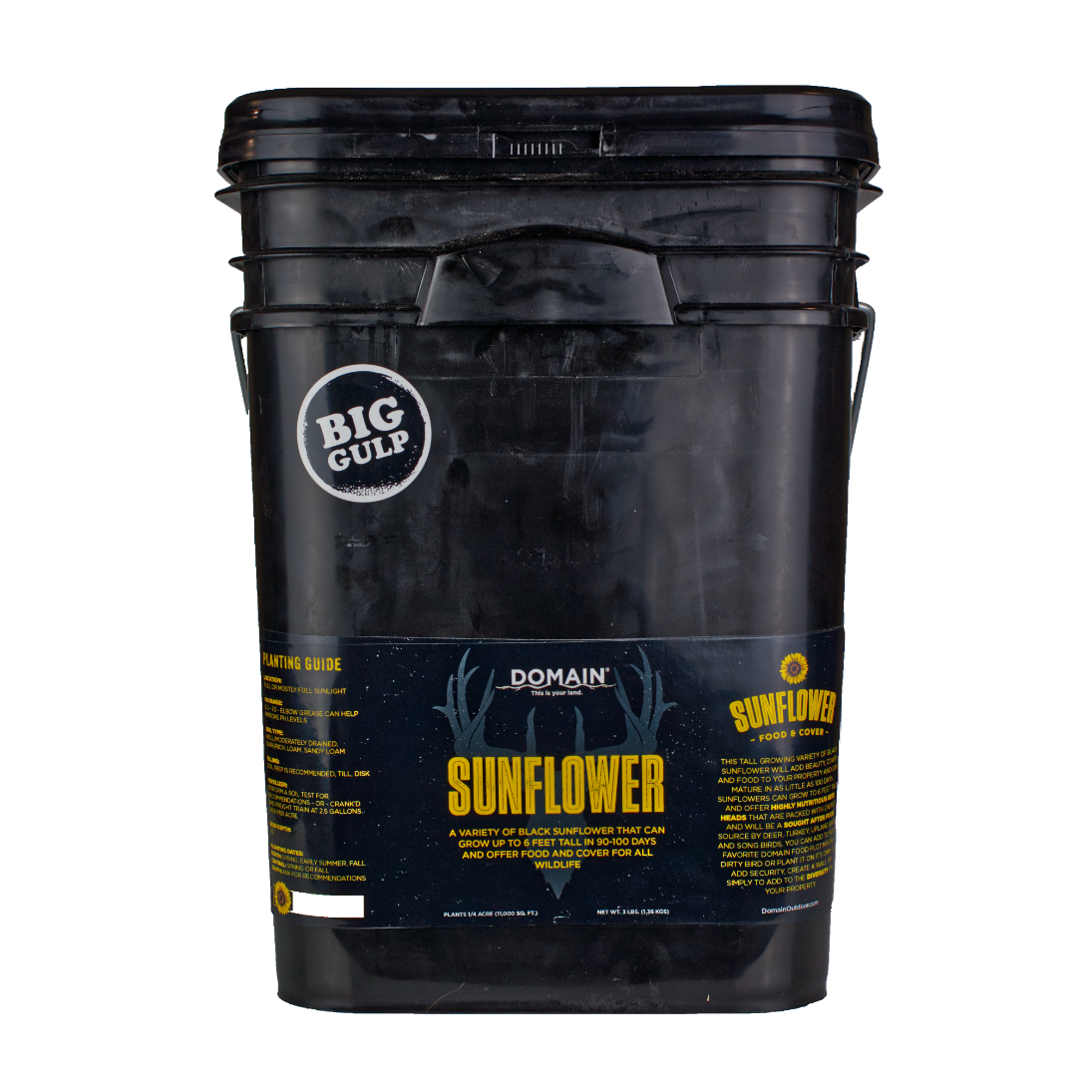
Sunflower Food Plot Seed is designed for summer wildlife structure, dove fields, upland bird food, pollinator value, and visual screening. Featuring black oil sunflower, it adds warm-season food, structure, or both at a time of year when a property can use more than another bare dirt fall plot waiting for August.
Features and Benefits
Black oil sunflower. Produces seed heads that benefit birds and wildlife while adding vertical structure.
Summer habitat value. Tall plants create visual structure during the growing season and can help break up open ground.
Dove-field potential. A familiar seed-producing crop for properties managed with upland birds in mind.
Pollinator benefit. Sunflower blooms add another food source for bees and other pollinators.
Full-sun crop. Best performance comes from open ground with plenty of sunlight.
Two acreage sizes. A 3 lb Jug covers about 1/4 acre and a 12 lb Big Gulp about 1 acre.
Specifications
| Sunflower Food Plot Seed | |
| Product Type | Warm-season wildlife / food plot seed |
| Seed / Plant Type | black oil sunflower |
| Best Uses | Summer wildlife structure, dove fields, upland bird food, pollinator value, and visual screening |
| Sunlight | full sun |
| Soil | well-drained to moderately drained soils |
| Recommended pH | 5.8–7.0 |
| Package / Coverage 1 | 1 Jug (3 lbs.) = 1/4 acre |
| Package / Coverage 2 | 1 Big Gulp (12 lbs.) = 1 acre |
| Planting Window | Plant after frost when soil temperatures are warm; commonly late spring through summer |
Actual establishment, forage production, and wildlife use will vary with rainfall, soil conditions, planting timing, fertility, and browse pressure.
How Much Do You Need?
1 Jug (3 lbs.) = 1/4 acre. For larger projects, 1 Big Gulp (12 lbs.) = 1 acre. Use the stated coverage as your starting point rather than seeding the whole container by feel.
For irregular hunting plots, multiply average width by average length and divide by 43,560 to estimate acres. That two-minute calculation is cheaper than buying extra seed and a lot less frustrating than discovering you only planted two-thirds of the plot.
Full Description
Warm-season planting gives a hunting property something useful to do before fall. Sunflower Food Plot Seed is built around black oil sunflower for summer wildlife structure, dove fields, upland bird food, pollinator value, and visual screening.
These crops can add protein, grain, flowers, shade, or vertical structure depending on the mix, helping bridge the gap between spring green-up and fall hunting plots.
Warm soils and timely moisture matter. Planting too early into cold ground or too late into summer drought can turn an easy project into expensive bird feed before the plot ever gets established.
Think of the planting as part of the annual rotation: feed wildlife, cover the soil, add structure, and set up the next crop rather than leaving acres idle until deer season is around the corner.
Planting Notes
Plant for your region. Plant after frost when soil temperatures are warm; commonly late spring through summer. Treat the calendar as a window, then let current soil moisture and forecast rainfall make the final call.
Start with pH. The supplied target range is 5.8–7.0. A soil test tells you whether lime or other correction belongs ahead of fertilizer and seed.
Match the site. Recommended soil fit is well-drained to moderately drained soils. Good drainage and a firm seedbed usually beat a fluffy, overworked seedbed.
Wait for warm soil. Warm-season crops generally establish better once frost risk has passed and soil temperatures are moving the right direction.
Why Land Managers Plant It
Sunflower Food Plot Seed earns its spot when you need summer wildlife structure, dove fields, upland bird food, pollinator value, and visual screening. It gives the plot a specific job instead of planting a seed blend simply because the label has a buck on it.
Match it with the right soil, planting window, and fertility program and the product becomes part of a hunting strategy—not just another green patch you admire from the truck.
Frequently Asked Questions
What is Sunflower Food Plot Seed best used for?
Its best fit is summer wildlife structure, dove fields, upland bird food, pollinator value, and visual screening. That is the role this product should solve on the property; if your main need is something else, another seed type may be a better use of the acre.
What is actually in Sunflower Food Plot Seed?
The supplied product information lists black oil sunflower. Knowing the species matters because it tells you whether the plot is built around fast annual forage, perennial nutrition, grain, brassicas, or habitat structure.
How much Sunflower Food Plot Seed do I need?
Use the published package coverage rather than guessing: 1 Jug (3 lbs.) = 1/4 acre; 1 Big Gulp (12 lbs.) = 1 acre. Measure irregular plots before ordering so your seeding rate stays where it belongs.
When should I plant Sunflower Food Plot Seed?
The supplied planting guidance is Plant after frost when soil temperatures are warm; commonly late spring through summer. Use that as a regional window, then adjust for local rain, soil moisture, temperature, and the date you need the plot hunting well.
What soil pH should I have before planting?
The listed target is 5.8–7.0. If your soil is below that range, correcting pH can improve nutrient availability and make the fertilizer you apply work harder.
When is this most useful to deer and wildlife?
Warm-season crops can provide forage, structure, flowers, or grain from late spring through summer and into early fall depending on the species and planting date.
Can I follow this with a fall plot?
Often yes. Warm-season crops can be terminated or allowed to mature, then followed with a fall rotation if timing, residue, and soil moisture allow.
What is the biggest establishment mistake?
Planting into cold soil or heavy weed competition. Warm-season crops need heat, moisture, and enough early freedom from weeds to get ahead.